Wine tourism properties in Dordogne
1 wine tourism property
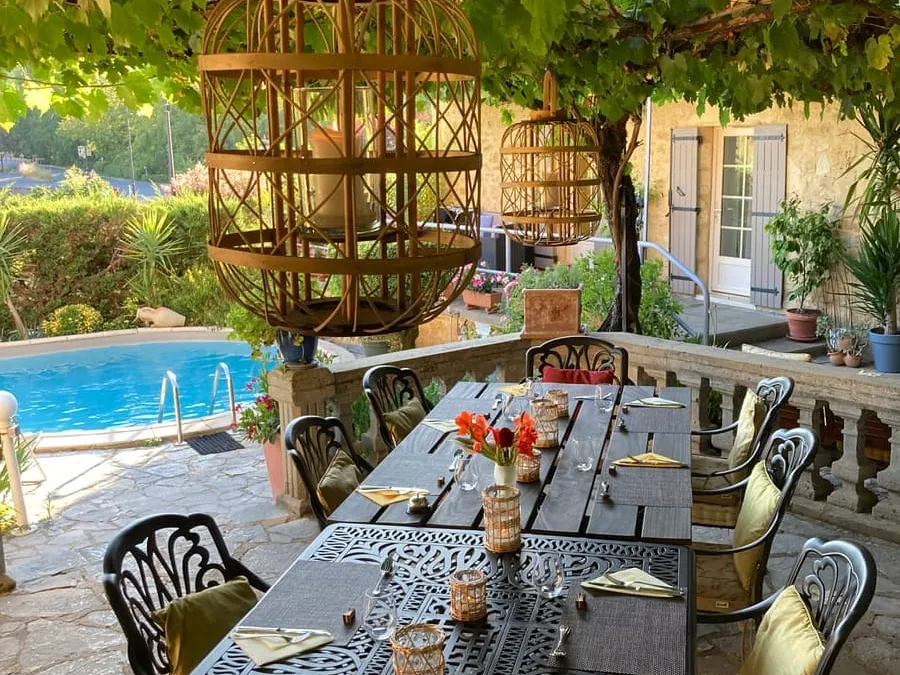
SAINT-CYBRANET · DORDOGNE · N°921
La Belle Demeure proche Sarlat
4 rooms · Table d'hôtes
### Dans le cœur du Périgord Noir : La Belle Demeure est située au centre du Périgord Noir, dans le village de Saint-Cybranet, à 14 km au sud de la cité médiévale de Sarlat et à 3 km de la rivière Dordogne. Des
- Table d'hôtes
- Pool
From
€105/night
See also in Dordogne
Wine tourism bed & breakfasts in Dordogne: Bergerac, Monbazillac and the Périgord route
Wine country in Dordogne: an often-overlooked region
Dordogne is not only castles, foie gras and prehistoric caves along the Vézère. The south of the department carries a historic vineyard of around 12,000 hectares, organised around the town of Bergerac. Long overshadowed by its giant Bordeaux neighbour, it now asserts its own identity, driven by a generation of growers who have strongly embraced organic, biodynamic and natural wine.
For a wine tourism stay, choosing a bed & breakfast in this area opens onto four main appellations: Bergerac (red, dry white, rosé), Monbazillac (sweet white), Pécharmant (aged red) and Saussignac (a lesser-known sweet white). Add Rosette, Montravel and Côtes de Bergerac on top, and there is enough to build multi-day itineraries.
Key estates and tasting villages
Bergerac, a medieval town listed as a City of Art and History, is the natural starting point. The Maison des Vins there offers a full overview of the appellations and regularly hosts guided tastings.
Several stops not to miss:
- Monbazillac, with its 16th-century Renaissance château dominating the slopes. The sweet wine is born from botrytis, the fungus that concentrates sugar on sémillon and muscadelle grapes.
- Pécharmant, a few kilometres from Bergerac, home to tannic aged reds supported by a distinctive geology (known locally as the « tran », a ferrous sandy clay).
- Saussignac, a tiny village with a small but serious sweet-wine appellation, where several organic growers are worth the detour.
Many châteaux and estates welcome visitors without appointment; others prefer an advance call. Local hosts usually know the winemakers personally and can help arrange visits.
Nearby: combining vineyards and heritage
The strength of Dordogne is how close the vineyards sit to a dense and varied heritage. From a Bergerac-area bed & breakfast, you can easily combine three types of stops over three or four days:
- The Périgord Pourpre bastides: Monpazier, Beaumontois-en-Périgord, Molières — medieval new towns with grid plans, covered markets and half-timbered houses.
- The Dordogne valley: between Lalinde and Limeuil, with canoeing, cliff overhangs and hilltop villages such as Trémolat.
- The Vézère valley, an hour north: Lascaux IV, La Roque Saint-Christophe, Les Eyzies and the National Museum of Prehistory.
Planning your stay
The wine tourism high season runs from April to October, peaking in September around the harvest. Several bed & breakfasts in Dordogne offer "wine weekend" packages combining nights, breakfast, table d'hôtes meal and a guided visit to one or two partner estates.
A few practical tips:
- Plan a designated driver or some soft-mobility option. Distances between estates are short but the narrow vineyard roads are unforgiving.
- Tastings at the producer are almost always free, with no obligation to buy. A few prestige estates charge 5 to 10 € per person, often refunded if you buy a bottle.
- Monbazillac and Saussignac sweet wines travel very well and age for years. They work as an aperitif as much as a dessert wine over Roquefort or foie gras.
- For purchases, buying directly at the estate remains the best option for price, freshness and traceability.
A recent shift to organic
The Bergerac vineyard has steadily moved towards environmental practices: the share of organic acreage there is well above the French national average. A number of growers also practise biodynamics. This is not a minor detail: it reshapes the way wine is discussed, from winter pruning to maceration, and it often becomes a conversation topic during tastings. For travellers drawn to responsible agriculture, Dordogne has plenty to offer.
Along the wine route in Dordogne
Wine tourism blends estate visits, tastings and meals in the heart of the vineyards. Holicosy lists 1 property well placed for wine tourism in Dordogne, notably around Saint-Cybranet.
Where can I stay for wine tourism in Dordogne?
Wine tourism properties in Dordogne are located in: Saint-Cybranet (1). Hosts often point guests to the best estates and cellars to visit.
How much does a wine tourism stay cost in Dordogne?
Rates go from 105€ to 105€ per night. The average price is 105€.
Plan your wine escape
Use the search to map out your journey along the wine route.
Our guides on this topic
Vendanges et chambres d'hôtes : vivre l'automne au cœur du vignoble
Septembre-octobre en région viticole : les vignes rougissent, les caves s'emplissent du parfum du moût, et les vendangeurs se retrouvent à la table commune. Séjourner en chambre d'hôtes chez un vigneron pendant les vendanges, c'est vivre la France viticole de l'intérieur.
Week-end gastronomique en chambre d'hôtes : du terroir dans l'assiette
Un week-end gastronomique réussi se joue autant dans l'assiette de la table d'hôtes que dans les épiceries fines et les marchés de producteurs. Les régions incontournables, les combinaisons terroir-hébergement et les conseils pour vivre un séjour savoureux de bout en bout.
Dormir en chambre d'hôtes en Provence : le guide complet
Lavande, villages perchés, marchés provençaux et cigales : les plus beaux séjours en chambre d'hôtes en Provence. Luberon, Alpilles, Verdon — itinéraires et bonnes adresses.